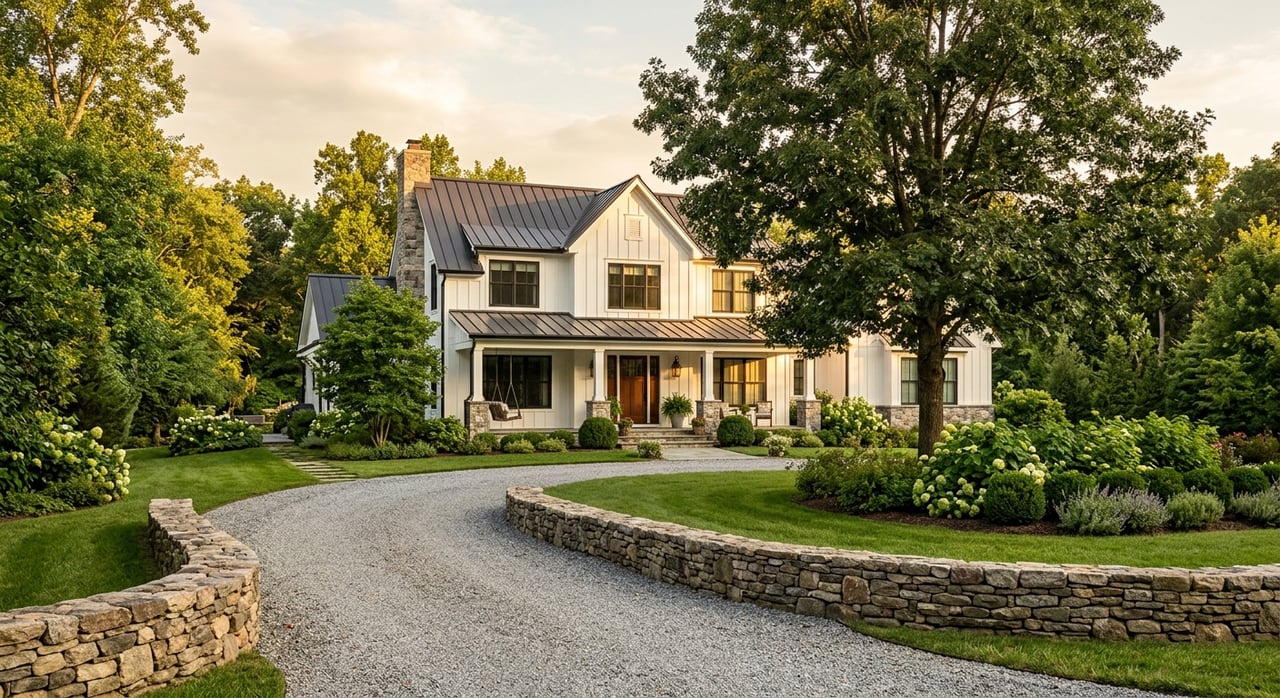
What To Know About Country Living In Tewksbury
June 11, 2026
June 11, 2026
If you picture country living as wide-open land, quiet roads, and a little more breathing room, Tewksbury Township delivers that feeling in a very real way. But rural living here also comes with practical questions about land use, wells, septic systems, historic homes, and day-to-day convenience. If you are thinking about buying in Tewksbury, this guide will help you understand what makes the township feel so distinctive and what you should look at before you make a move. Let’s dive in.
Tewksbury Township has a land pattern that is very different from a typical suburban community. It covers 31.76 square miles, and local planning materials show that 58% of parcels are larger than 10 acres. The township also notes that 82% of its land mass is zoned in the Highlands District or Farmland Preservation District, where minimum lot sizes often range from 7 to 12 acres.
That matters because the landscape shapes the lifestyle. Instead of tightly clustered neighborhoods and dense development, you will often find larger parcels, preserved land, farm fields, wooded areas, and stream corridors. In practical terms, that is a big part of why Tewksbury reads as country living.
The township’s conservation planning also supports that character. Planning documents discourage conventional subdivision patterns and instead favor conservation-based layouts that preserve open space or farmland. For buyers, that often means the setting feels more natural and less built out, even when homes are within the same township.
A large parcel can sound simple on paper, but rural property usually requires a closer look. In Tewksbury’s R-1.5 Residential District, the minimum lot area is 1.5 acres, with a 175-foot minimum lot width and a 15% maximum lot coverage standard. Even in areas with more residential development, the rules still reinforce a low-density feel.
That said, the full parcel size does not always equal fully usable land. The township’s zoning permit application specifically asks applicants to identify wetlands, steep slopes, stream encroachment areas, flood hazard areas, and conservation easements on the survey. So when you compare properties, it helps to think beyond acreage alone.
A 5-acre or 10-acre property may have very different day-to-day usefulness depending on the land itself. Drainage patterns, topography, protected areas, and access all affect how the property lives. That is why rural home shopping in Tewksbury is often as much about site conditions as it is about the house.
One of the biggest shifts for buyers coming from more conventional suburban areas is utilities. Tewksbury’s farmland preservation plan says there is very little area served by public water and sewer, and that most agricultural areas rely on private wells and individual on-site septic systems. That is a normal part of country living here, but it does change your due diligence.
Instead of assuming utility service works like it does in denser communities, you will want to evaluate the property as a complete system. The house, the lot, the well, the septic setup, and the surrounding environmental conditions all work together. In a township interlaced with streams and with some subwatersheds showing limited water availability, this becomes especially important.
For septic systems, maintenance history matters. A typical residential septic system should generally be inspected every 1 to 3 years and pumped every 3 to 5 years. If you are considering a home with septic, ask for the age of the system, inspection records, and pumping history early in the process.
For private wells, New Jersey has a specific closing requirement. Under the Private Well Testing Act, the buyer and seller must review the private well test results before closing can occur. NJDEP also recommends regular well testing even when it is not legally required, which is another good reminder that rural ownership involves a little more hands-on awareness.
If you are buying in Tewksbury, a strong early review can save you time and surprises later. Rural properties often have more moving parts than a standard lot in a fully serviced subdivision.
Here are some of the first items to check:
This kind of review is not about finding flaws. It is about understanding how the property functions so you can make a confident decision.
For many buyers, Tewksbury’s outdoor access is part of the appeal. Country living here is not only about having space at home. It is also about the way the surrounding landscape supports recreation and a more outdoors-oriented routine.
Cold Brook Preserve in Oldwick is a 180-acre Hunterdon County park with more than two miles of easy trails. County materials note that the trail system uses old farm roads and field edges, and it allows horseback riding, cross-country skiing, and mountain biking. That kind of amenity adds to the township’s rural identity in a very practical way.
The Columbia Trail is another standout feature. Hunterdon County describes it as a 7-mile converted railway trail that runs through Tewksbury Township and nearby communities, with opportunities for hiking, biking, and cross-country skiing. For buyers who want scenic access built into everyday life, amenities like this can be a major lifestyle benefit.
If you are thinking about horses or trail-adjacent living, it helps to know that access rules vary by location. County guidance notes that horses are allowed only in designated areas, and some preserves offer trailer parking while others are intended for nearby riders. In other words, the equestrian lifestyle is available, but it is best to confirm how each location actually works.
Part of Tewksbury’s charm comes from its historic villages and older housing stock. In Oldwick, for example, the state historic preservation page notes that 31 Old Turnpike Road was built around 1806 and remains a contributing resource in the Oldwick Historic District. The Pottersville Village Historic District, which extends into neighboring townships, is also described as having a road pattern largely laid out in the 19th century, with the surrounding region remaining rural in character.
For buyers, that historic setting can be a real draw. You may find architectural character, established landscapes, and a sense of place that is hard to replicate in newer communities. At the same time, older homes often come with older floor plans, aging systems, and a longer list of maintenance questions.
If a home is in or near a historic district, exterior changes may require review or approval. That does not make ownership harder by default, but it does mean you should confirm what is required before planning renovations or visible exterior updates. Knowing that upfront helps you match the property to your goals.
Country living usually involves tradeoffs, and Tewksbury is no exception. Daily travel in the township is largely road-based, and county directions to local destinations reflect that dependence on regional roads such as Interstate 78, Route 523, and Route 517. If you are moving from a more built-up area, the change in rhythm can feel significant.
For many buyers, the extra space, quiet, and scenery are worth it. But it is still smart to think carefully about how the commute fits your routine, especially if you travel often or want quick access to services. Rural living can be deeply rewarding when your expectations match the reality of the location.
The same goes for maintenance. Larger lots, private utilities, drainage concerns, and winter access can all add to the ownership workload. That does not mean these properties are harder in a negative sense, only that they ask for a different level of planning than a smaller suburban lot.
Tewksbury can be a great fit if you want privacy, open space, trail access, and a setting shaped by farmland, woods, and historic character. It can also be appealing if you value a home environment that feels separate from more conventional suburban development. The township’s land-use framework strongly supports that country atmosphere.
At the same time, the best Tewksbury buyers are usually the ones who go in with clear eyes. They understand that lot conditions matter, wells and septic systems require attention, older homes need thoughtful review, and convenience may look different here. When you know what to expect, you are in a much better position to enjoy what makes the township special.
If you are weighing a move to Tewksbury, local guidance can make a big difference. An experienced agent can help you compare properties, ask better questions early, and navigate the details that come with buying in a rural setting. If you are ready to explore Tewksbury country living, connect with Lee Opperman for trusted local insight and a smooth path forward.
Stay up to date on the latest real estate trends.
Get assistance in determining the current property value, crafting a competitive offer, writing and negotiating a contract, and much more. Contact me today.