Flemington Raritan Condos and Townhomes: Buyer Guide
June 4, 2026
June 4, 2026
Looking for a home with less upkeep, a lower entry price, or a more lock-and-leave lifestyle? In Flemington and Raritan Township, townhomes and condos can offer exactly that, but the details matter more than many buyers expect. If you are comparing attached homes in this part of Hunterdon County, understanding location, ownership structure, fees, and day-to-day lifestyle can help you make a smarter move. Let’s dive in.
Flemington Borough and Raritan Township are closely connected, which can make the local market a little confusing at first. Flemington Borough is completely surrounded by Raritan Township, so a home may have a Flemington mailing address while actually being located in Raritan Township.
That distinction matters when you review listings, taxes, community rules, and public records. For example, recent listings show that 1201 Southard Ct is in Raritan Township with a Flemington address, while 5 William Martin Way is in Flemington Borough. If you are shopping in this market, it helps to confirm the actual municipality on the deed or listing right away.
Another reason attached homes are popular here is location. Raritan Township’s highway network includes Routes 202, 31, and 12, and many condo and townhome communities cluster near the borough and major travel corridors. That can make it easier to reach shopping, dining, and daily errands.
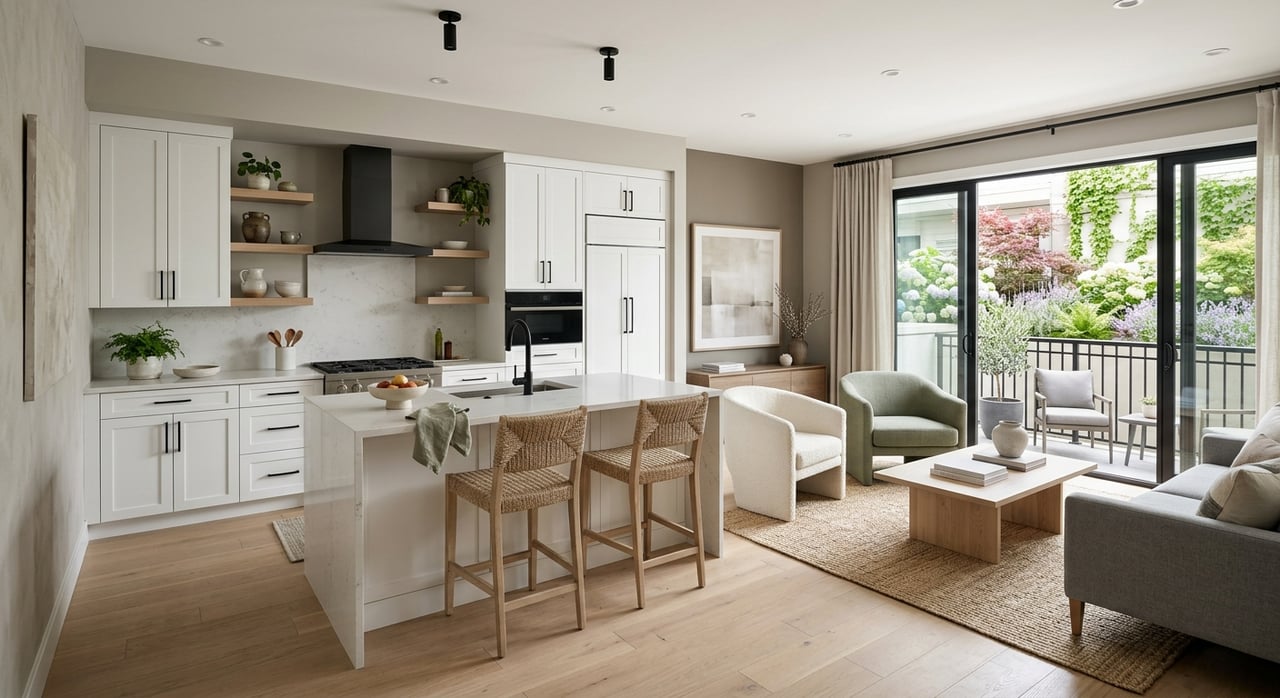
Attached housing in Flemington and Raritan Township is not one-size-fits-all. You can find smaller condos, traditional two-story townhomes, larger multi-level homes with garages, and even age-restricted options with main-floor living.
Recent local examples show the variety. A one-bedroom condo at 208 Blackberry Ct offered one bath and community amenities like a pool, tennis, volleyball, and a community room. Other listings included two-bedroom townhomes around 1,058 to 1,340 square feet, a two-bedroom, 2.5-bath condo or co-op at 5 William Martin Way with 1,816 square feet, and a 3-bedroom townhouse in Coppermine Village with garage parking.
If you are thinking long term, some attached homes also offer layouts that appeal to downsizers. A recent 55+ townhome at Hunterdon Creekside had about 2,039 square feet, a main-floor primary suite, loft, and sunroom. In this market, it is possible to find attached homes with decks, basements, garages, and open-concept living areas, depending on the community.
The lifestyle can vary just as much as the floor plan. Some communities feel more like garden-style condo living, while others feel more like a neighborhood of side-by-side townhomes with private entrances.
For example, 603 Nottingham Way is a first-floor condo with a finished basement and access to an on-site pool and tennis courts. That setup is different from a private-entry townhouse in communities such as Stonegate or Coppermine Village, where the home may feel closer to a traditional house experience.
For you as a buyer, the key question is not only how the home looks. It is also how the property is owned and maintained. Two homes may seem similar in photos but come with very different rules, responsibilities, and monthly costs.
One of the biggest reasons buyers consider condos and townhomes in this area is affordability. In Hunterdon County’s March 2026 local market report, the year-to-date median sales price was $630,000 for single-family homes and $390,000 for townhouse-condo homes.
That gap helps explain why attached homes often appeal to first-time buyers, downsizers, and buyers who want to stay in the area with a lower initial purchase price. Statewide data also showed the same general pattern in March 2026, with a median sales price of $570,000 for single-family homes and $416,500 for townhouse-condo properties.
Recent local listings back that up. Attached homes recently ranged from about the high-$200,000s to the mid-$600,000s, including 208 Blackberry Ct at $275,000, 1201 Southard Ct at $369,900, and 12 Barnett Rd at $645,900. By comparison, detached homes in the same area were often listed higher, including examples at $625,000, $725,000, $930,000, and $1.6 million.
That said, lower purchase price does not always mean lower monthly cost. Association fees can narrow the gap, so it is smart to compare the full monthly picture rather than the list price alone.
Association fees in this market vary quite a bit. Recent listings showed dues ranging from $320 quarterly at 206 Spruce Ct to $310 monthly at 5 William Martin Way, $315 monthly at Coppermine Village, $344 monthly at 603 Nottingham Way, $355 monthly at 208 Blackberry Ct, and $646 monthly at Hunterdon Creekside.
What those fees cover also changes from one community to another. In local examples, dues may include common-area maintenance, snow removal, trash, road maintenance, lawn care, insurance, and exterior building maintenance.
This is where many buyers need to slow down and ask questions. Some detached homes in planned communities also had dues, including $140 per month at 16 Aberdeen Cir and $285 annually at 2 Moonlight Trail. So if you are deciding between attached and detached housing, do not assume a single-family home automatically means no association fees.
In New Jersey, the maintenance split depends heavily on the ownership structure and governing documents. The state’s Planned Real Estate Development program requires developers of common-interest communities to register an offering plan before selling units.
Under the New Jersey Condominium Act, an association is responsible for common-element maintenance and repair, collecting common expenses, enforcing rules, maintaining insurance, and keeping accounting records. But in fee-simple townhouse developments, owners may be directly responsible for residential building maintenance if the association does not have that duty.
In simple terms, two attached homes can come with very different owner responsibilities. In one community, the association may handle exterior building maintenance. In another, you may still be responsible for parts of the structure even if you pay an HOA fee.
That is why reading the documents matters so much. Before you buy, you want to know exactly who handles the roof, siding, windows, hallways, and exterior areas.
New Jersey’s Structural Integrity Law adds another important layer for buyers to understand. Planned-real-estate associations are required to obtain reserve studies with 30-year funding plans.
These reserve funds are intended to help cover major repairs and replacements without relying on special assessments or loans. Still, the state also notes that special assessments or loans can happen if a component fails sooner than expected or reserve funding is not enough.
For you, that means the monthly fee is only part of the story. A well-run association should be planning for future repairs, but it is still wise to review the reserve study, ask about current reserves, and find out whether any special assessments are anticipated.
For many buyers, convenience is the biggest win. Attached living often means less exterior upkeep, a smaller footprint to manage, and in some cases one-level living.
Location can add to that appeal. Because of the local road network and the way many communities are positioned near the borough, attached homes can offer easier access to shopping, restaurants, and daily services. One recent listing at 5 William Martin Way even had a walkability score of 74 out of 100 on its listing page.
If your goal is to simplify homeownership without leaving the area, a condo or townhome can be a practical fit. That is especially true if you value predictable maintenance, shared amenities, or a layout that supports easier day-to-day living.
Condos and townhomes are not the best choice for everyone. If you want more yard space, greater control over exterior changes, or less association governance, a detached home may feel more comfortable.
Attached living tends to work best for buyers who like convenience and are comfortable with community rules. It may be less appealing if you want maximum autonomy over the property or do not want ongoing association involvement.
The right answer comes down to your priorities. Some buyers are happy to trade a larger yard for less maintenance and a lower entry price. Others would rather take on more upkeep in exchange for more privacy and control.
If you are seriously considering a condo or townhome in Flemington or Raritan Township, these are the questions that matter most:
These questions can help you compare homes more accurately. They also help you avoid surprises after closing.
In Flemington and Raritan Township, townhomes and condos can offer a smart path into the market, a simpler lifestyle, or a solid downsizing option. The local housing stock includes everything from smaller condos with shared amenities to larger townhomes with garages, decks, and flexible living space.
The best choice depends on how you weigh price, convenience, maintenance, and control. When you understand the ownership structure, association responsibilities, and long-term costs, you can shop with much more confidence.
If you want experienced guidance comparing attached homes in Hunterdon County, Lee Opperman can help you sort through the details and make a move that fits your goals.
Stay up to date on the latest real estate trends.


Get assistance in determining the current property value, crafting a competitive offer, writing and negotiating a contract, and much more. Contact me today.