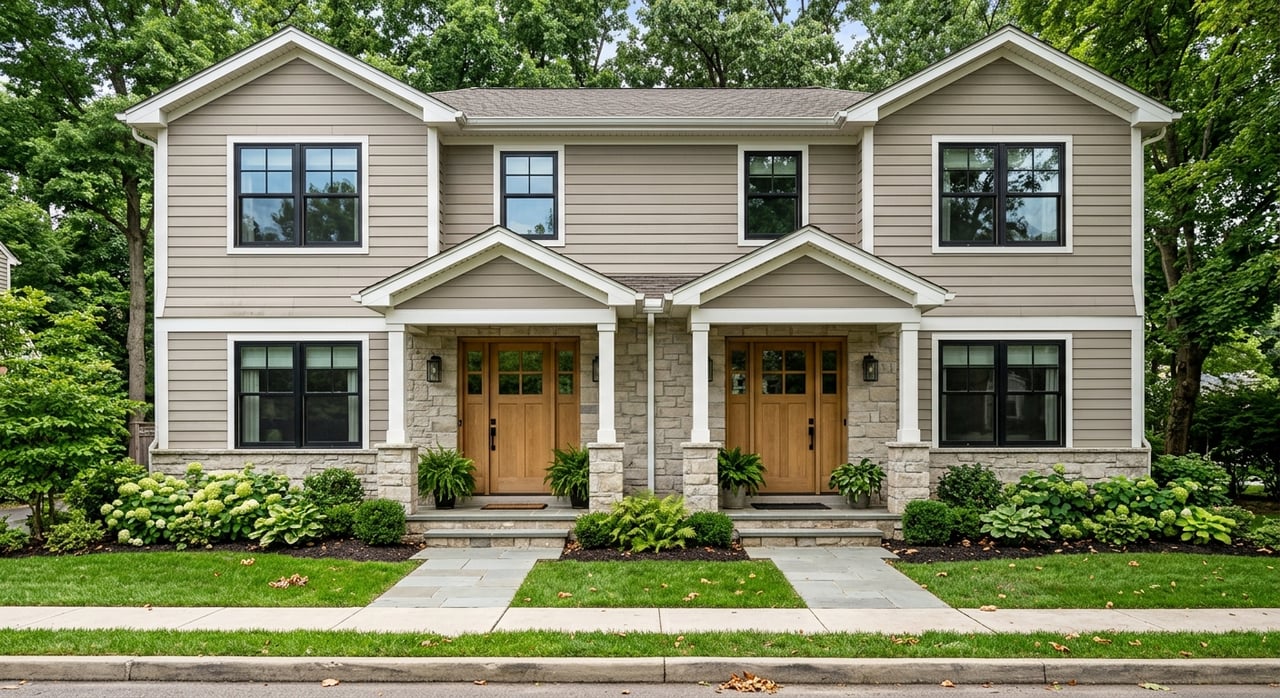
Start Smart With Hunterdon County Rental Investing
June 25, 2026
June 25, 2026
If you are thinking about buying your first small rental in Hunterdon County, it is easy to assume the numbers will work just because the area is desirable. But this is a market where strong home values, limited supply, and New Jersey expenses can quickly narrow your margin. The good news is that with careful screening, local due diligence, and the right support, you can approach your first investment with more confidence. Let’s dive in.
Hunterdon County offers a mix of suburban and rural living with relatively limited new housing supply. The county’s 2024 population estimate was 131,708, and there were 389 total residential permits in 2024, including 199 single-family permits. For you as an investor, that limited pipeline can help support long-term demand when you buy the right property.
The county also shows strong household economics. Census data for 2019 through 2023 lists a median household income of $139,453, a median gross rent of $1,707, and a median owner-occupied home value of $498,800. That tells you there is spending power in the market, but it also signals that purchase prices may be high relative to rent.
One of the biggest mistakes first-time investors make is chasing a property before they understand the local math. Using the county’s median home value of $498,800 and median gross rent of $1,707, the rough price-to-rent ratio comes out to about 24.4x. That is a useful warning sign that strong cash flow is not automatic here.
In simple terms, Hunterdon County may be better suited to investors who value stability, long-term ownership, and careful property selection. If you expect easy monthly cash flow without tight underwriting, you may be disappointed. If you go in with realistic numbers, you can make much better decisions.
Before you spend too much time on a property, run a simple rent test. A practical first-pass benchmark is the county median gross rent of $1,707 per month, or about $20,484 per year. If a property cannot reasonably compete near that level after factoring in its condition, location, and unit type, the deal may be too thin.
That does not mean every property must match the median exactly. It means you need a believable rent range based on what the home offers. If the expected rent looks soft from the start, rising expenses can quickly turn a decent-looking deal into a weak one.
In Hunterdon County, property taxes can make or break a small rental. New Jersey property taxes are local, and the state applies the general tax rate to assessed value. That means you should underwrite each parcel individually instead of leaning on a county average.
The 2025 state tax-rate table shows clear variation across Hunterdon municipalities. Examples include Lambertville City at 2.126, Tewksbury Township at 2.519, Flemington Borough at 2.736, Readington Township at 2.798, Clinton Town at 2.948, and Raritan Township at 3.029. A property in a town with higher taxes may produce less net income even if the rent looks stronger on paper.
When you evaluate towns, avoid looking at just purchase price and rent. You also want to compare tax rate, commute access, housing type, and flood risk. That is a much more useful framework than asking which town is “best.”
For example, one area may offer lower taxes, while another may offer stronger commuter convenience. Your job is to weigh the full picture and decide what fits your investment goals.
Transportation matters more in Hunterdon County than many new investors expect. The county reports a mean travel time to work of 33.7 minutes, which tells you commute patterns are a meaningful part of daily life. A rental with easier access to work routes, parking, or transit may appeal to a wider set of renters.
Hunterdon County operates LINK demand-response service for residents, and NJ Transit lists High Bridge Station on the Raritan Valley Line. That does not mean every renter will use those options, but it does make transportation access a practical screening factor. In a more car-dependent market, location convenience can play a big role in tenant interest.
County data points to a more selective renter pool than you might find in a dense urban market. The county’s median age is 46.3, average household size is 2.51, bachelor’s degree attainment is 57.7%, and broadband subscription is 96.0%. While no investor can assume exactly who the next renter will be, these numbers suggest many renters may care deeply about condition, internet quality, parking, and commute convenience.
That means presentation matters. A clean, well-maintained property with responsive upkeep may compete better than a larger home that feels dated or inconvenient. In this market, strong execution often matters as much as bedroom count.
If you are buying your first rental, it is smart to be more conservative than optimistic. In Hunterdon County, major expense categories usually include:
These costs are not side notes. They are core parts of whether the investment works. If you ignore reserves or underestimate taxes, your projected return can look much better than reality.
Even a good property will have repairs, vacancy periods, or tenant turnover over time. A first-time investor often focuses on mortgage and rent, but the stronger approach is to ask how the property performs when things are not perfect. If the deal only works in a best-case scenario, it may not be the right first investment.
Before you buy, make sure you understand the rules that shape rental ownership in New Jersey. The state does not have a statewide rent-control law, but municipalities may adopt rent control or rent-leveling ordinances. That means you need to check the local rules in the specific Hunterdon County town where you plan to invest.
The state also requires landlords to distribute the Truth in Renting guide. Security deposits cannot exceed one and one-half months’ rent. Beginning March 20, 2024, landlords must provide a Flood Risk Notice to prospective renters.
New Jersey’s Law Against Discrimination also bars discrimination based on protected characteristics and source of lawful income. In addition, the state says many residential evictions require good cause. These are important rules, and they are a strong reason to get New Jersey-specific legal guidance instead of guessing.
A first rental is much easier to manage when you have the right professionals around you. For many small investors, the most useful team includes:
That team can help you think through financing, lease language, local notices, tenant screening, and problem resolution. It can also save you from expensive mistakes that often happen when new investors try to piece everything together on their own.
If you want a simple plan, start by narrowing your search to properties that make sense on paper before emotion takes over. Look at likely rent, property taxes, commute convenience, parking, condition, and any local ordinance questions. Then stress-test the numbers with realistic expenses and reserves.
From there, think about how easy the property will be to rent and maintain. In Hunterdon County, a well-located home with solid condition and manageable expenses may be a better first investment than a more complex property that looks exciting at first glance. Your first win often comes from buying something understandable, durable, and well-supported by local demand.
If you are exploring small rental opportunities in Hunterdon County, working with an experienced local broker can help you sort through the numbers, compare towns, and avoid costly blind spots. Lee Opperman brings decades of Central New Jersey market experience and works with buyers, landlords, renters, and small investors who want steady, informed guidance.
Stay up to date on the latest real estate trends.


Get assistance in determining the current property value, crafting a competitive offer, writing and negotiating a contract, and much more. Contact me today.