Comparing Basking Ridge Neighborhoods For Move-Up Buyers
July 9, 2026
July 9, 2026
If you are moving up in Basking Ridge, one zip code can lead you to very different kinds of homes. You might be comparing a historic village property, a townhome in a planned community, or a house on several acres, and each choice comes with a different daily routine. This guide will help you compare the main Basking Ridge neighborhood types, understand what trade-offs matter most, and narrow your search with more confidence. Let’s dive in.
Basking Ridge is the village center of Bernards Township, and the township treats Basking Ridge and Liberty Corner as distinct character areas. That matters because the housing stock is not one-size-fits-all.
In the established parts of town, you will find older homes, pre-war subdivisions, and lot patterns that often predate modern zoning. In The Hills and several planned developments, the housing mix shifts toward higher-density homes like townhouses, apartments, and condominiums.
For move-up buyers, that means your next home is not just about price. It is also about whether you want character, convenience, land, or low-maintenance living.
Before you compare neighborhoods, it helps to define what “move-up” means for you. Some buyers want more square footage and newer finishes, while others want more privacy, a better commute setup, or less upkeep.
In Basking Ridge, the same address label can mean very different ownership experiences. A Basking Ridge mailing address does not automatically tell you whether you are buying into a village street, a commuter pocket, or a planned townhome community.
A smart shortlist usually comes down to three questions:
The downtown Basking Ridge area and older village streets appeal to buyers who want charm, location, and a neighborhood pattern shaped over time. The township historic preservation plan describes Basking Ridge and Liberty Corner as village centers with 18th- and 19th-century buildings, pre-war subdivisions, and historic revival styles.
This part of town often trades on character more than uniformity. Many parcels predate zoning, so lot size, setbacks, and impervious-coverage patterns can be irregular.
That can be appealing if you want a home with personality and a more traditional street feel. It can also mean you should look closely at how the lot functions if you are hoping to add outdoor features or expand later.
A recent example on South Finley Avenue shows the range in this category, with an 1875 home offering 2,106 square feet on 0.59 acres. That kind of listing highlights what many move-up buyers like here: established setting, mature lots, and a location close to the village core.
If you are comparing older-core homes, future plans matter. The township states that additions, decks, patios, fences, pools, driveways, and sheds require zoning review, and older lots may already have nonconforming conditions.
For a move-up buyer, that means the home that feels “good enough for now” may not always be simple to change later. It is wise to evaluate present fit and future flexibility together.
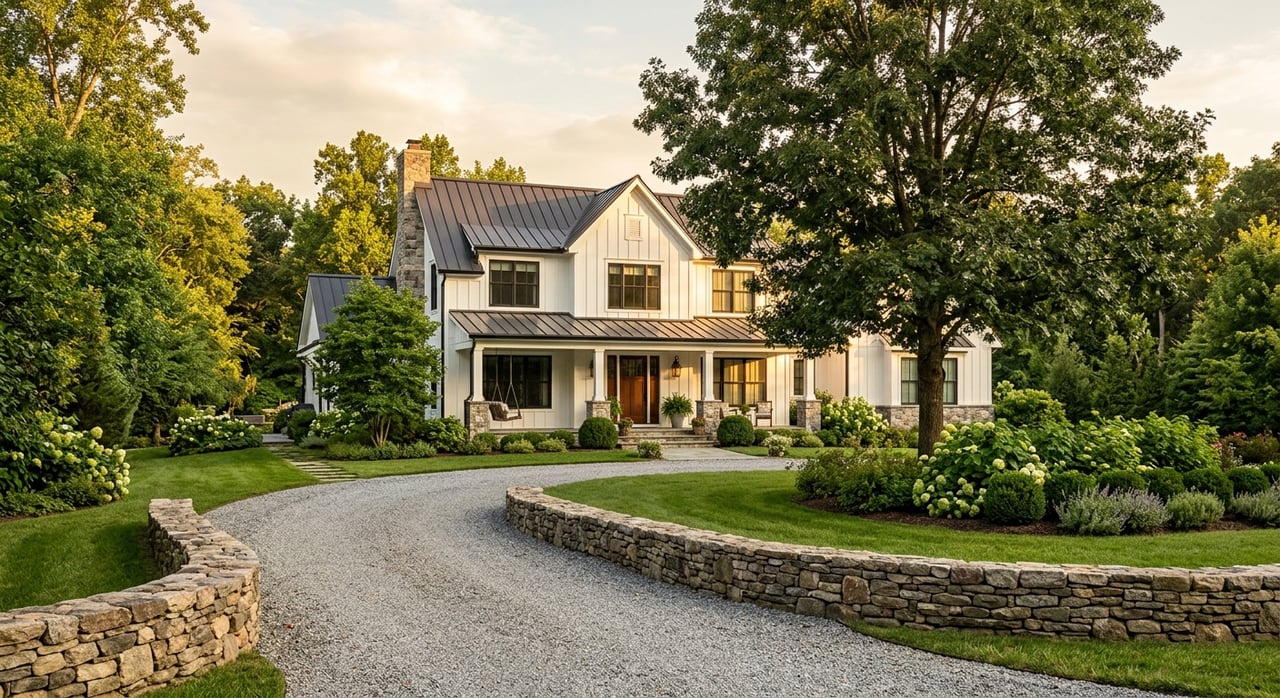
If your version of moving up means more distance between homes, more land, and more room to grow, Liberty Corner and the larger-lot mountain pockets deserve a close look. The township identifies Liberty Corner as a distinct historic district and recognizes that the area has its own character tied to building form, landscaping, and streetscape.
Outside the village center, listings quickly move into a different scale. Recent examples include homes on 3.12 acres and 5.07 acres, plus a land listing marketed for a 4,000- to 8,000-square-foot residence.
This is often the part of the market that attracts buyers who want privacy and a less uniform neighborhood layout. You may gain more yard, more separation, and more potential for a custom lifestyle, but you will usually trade away some of the simplicity that comes with planned communities.
This category may work well if you want:
Larger properties often bring more ongoing maintenance and a different budgeting picture. You may also find that homes vary widely in age, layout, and lot use, which makes side-by-side comparisons more important.
For move-up buyers, this part of Basking Ridge is often less about convenience and more about space and setting. If that is your top goal, these areas can stand out.
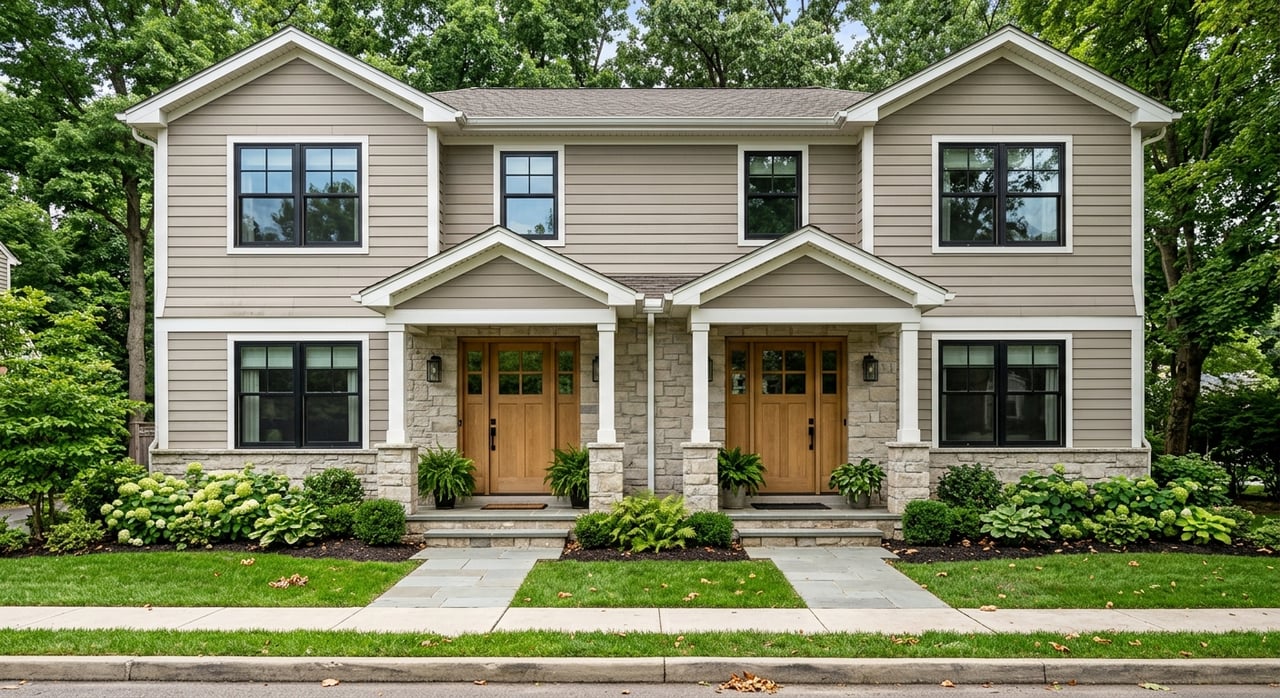
For many move-up buyers, the most practical jump in lifestyle happens in The Hills and similar planned communities. Bernards Township classifies The Hills and several other developments as higher-density or multi-family areas, including townhouses, apartments, and condominiums.
This group includes The Hills, Patriot Ridge, Society Hill, The Cedars, Spring Ridge, and Maple Run. These communities can offer a step up in space, finish level, or amenities while keeping maintenance more predictable than a large-lot single-family home.
Current listing snapshots show clear differences within this category. In The Hills, recent newest listings showed a median list price around $599,000. A Patriot Hill townhome listing described a four-level Danbury model with three bedrooms, 2.1 baths, a finished basement, and access to pools, a clubhouse, fitness center, tennis and pickleball courts, and walking and jogging paths.
Society Hill offers another low-maintenance option, with a recent two-bedroom, 2.5-bath townhome listed at $499,000 and a $400 monthly HOA. The Cedars has a somewhat more condo-oriented feel, with a recent two-bedroom, 2.5-bath example around $549,000 and a $245 monthly HOA. Spring Ridge spans both condos and townhomes, with recent examples from a $430,000 two-bedroom condo to a three-bedroom townhouse with a first-floor primary suite and detached garage.
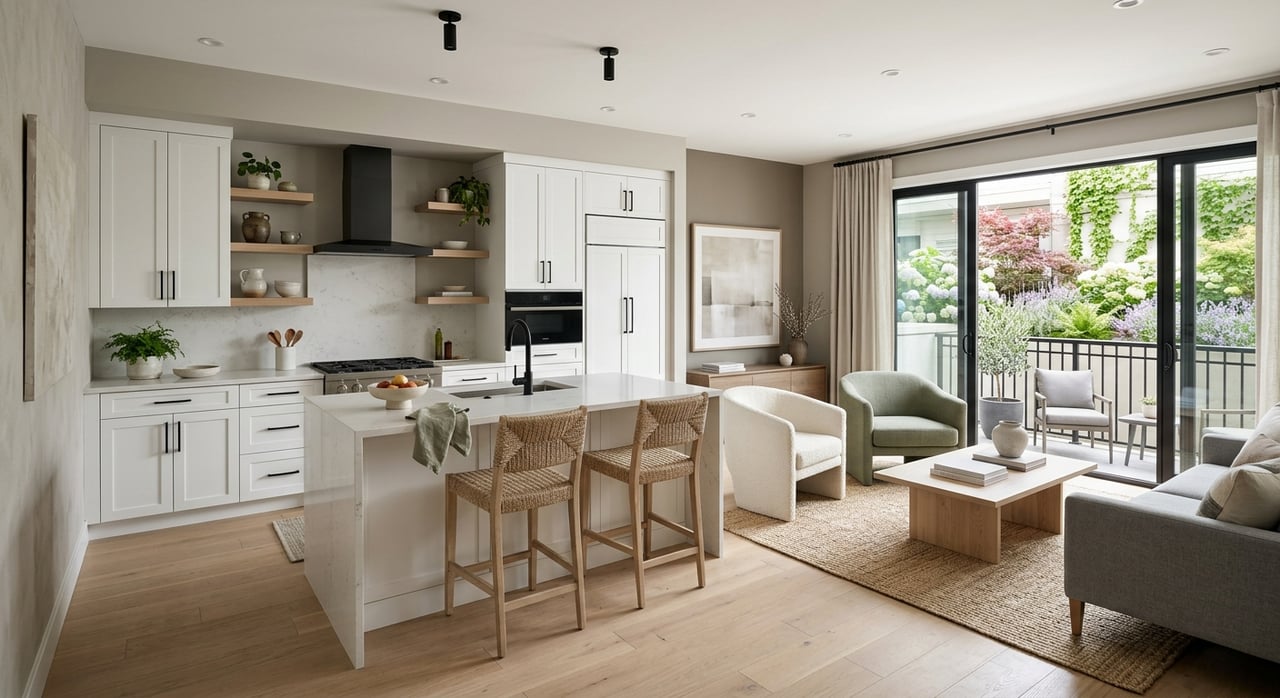
These neighborhoods can be a strong fit if you want to improve your living space without taking on the full responsibility of a larger detached home. They often simplify exterior upkeep and provide access to shared amenities.
That can be especially attractive if your move-up plan includes balancing work, commuting, and household logistics. In practical terms, you may get more usable interior space per dollar while keeping your weekends freer.
When you look at these communities, compare:
A lower-maintenance lifestyle can be a real upgrade, but only if the layout and storage work for your household. This is where model type, finished basement space, and bedroom placement matter.
The Lyons pocket stands out for buyers who want train access without giving up lot size. Lyons sits on NJ Transit’s Morris & Essex Line, and Lyons Station offers parking across two lots, including 95 permit spaces plus 236 daily or permit spaces.
Current Lyons-area listings show that this commuter convenience can still come with substantial land. Recent examples included homes on 1.03 acres and 1.34 acres, and one listing highlighted walking distance to the station and Lakeland bus service along with quick access to downtown Basking Ridge dining, parks, and shopping.
For some move-up buyers, this is a sweet spot. You may be able to keep a stronger commute setup while still moving into a home with a larger yard and more breathing room.
If your next move is shaped by both work and lifestyle, Lyons may deserve a top spot on your list. It blends commuter practicality with the appeal of detached-home living.
That combination is not identical to the village core or the mountain pockets. It offers a different kind of convenience, one built around station access more than walkable village character.
Move-up buyers often focus first on the house, but your daily routine matters just as much. Bernards Township’s recreation system is a major part of how different parts of Basking Ridge live day to day.
Pleasant Valley Park includes the pool, playground, athletic fields, six tennis courts, six pickleball courts, four platform tennis courts, basketball, sand volleyball, a pond, an amphitheater, trails, and picnic shelters. Mountain Park adds turf and ball fields plus trails, while Southard Park and Rebel Hill offer smaller neighborhood-scale recreation.
Errands and municipal services also cluster in a compact corridor. The township directory places the library at 32 S. Maple Ave., the municipal building at 1 Collyer Lane, and engineering and planning at 277 S. Maple Ave.
That means some neighborhoods win on park access, some on station access, and others on privacy. The best choice depends on which daily pattern fits your household best.
A simple framework can make your search much clearer. Instead of asking which neighborhood is “best,” ask which one best matches your priorities.
| Neighborhood type | Best for | Main trade-off |
|---|---|---|
| Historic core | Character, village setting, central errands | Irregular lots and possible limits on future changes |
| Liberty Corner and mountain pockets | Privacy, land, estate-style setting | More maintenance and less uniform inventory |
| The Hills and planned communities | Lower-maintenance move-up options, amenities, predictable ownership structure | Less land and closer spacing |
| Lyons area | Train access with larger lots | More location-specific inventory |
When homes move quickly, it is easy to focus only on finishes. In Basking Ridge, you will make better decisions if you read active and sold listings side by side and keep the subarea in context.
Market snapshots show strong activity, but they are measuring different things. Redfin’s Basking Ridge page reported a median sale price of about $1.36 million over the three months ending May 2026, roughly 18 days on market, and about two offers on average, while Zillow showed a $949,433 average home value, 72 active listings, 43 new listings, and an $886,150 median list price as of May 31, 2026.
Those figures are best treated as directional, not directly comparable. For you, the more useful question is how homes similar to your target neighborhood are priced, how quickly they move, and what compromises buyers are making in each submarket.
Moving up in Basking Ridge is rarely just about getting a bigger house. It is about choosing the version of Basking Ridge that fits how you want to live, commute, and spend your time.
Some buyers will feel most at home in the historic core. Others will prefer the privacy of Liberty Corner, the simplicity of The Hills, or the station access of Lyons.
The key is to compare neighborhood type, maintenance, lot size, and convenience all at once. If you want experienced guidance on how to weigh those trade-offs in today’s market, Lee Opperman can help you build a smart move-up plan with local insight and steady, practical advice.
Stay up to date on the latest real estate trends.
Get assistance in determining the current property value, crafting a competitive offer, writing and negotiating a contract, and much more. Contact me today.